

Mold Removal Cost in Connersville, IN
Mold removal cost in Connersville depends on how far the mold has spread through your home's materials and structure. Indiana's humid continental climate and the region's older housing stock—particularly homes with basements and crawl spaces—create conditions where moisture accumulates year-round, allowing mold to grow across drywall, insulation, carpet, and HVAC components if left unchecked. The scope of remediation work, containment requirements, whether air scrubbing equipment is needed, and any structural rebuild after mold removal all drive what you'll pay, which is why an early inspection by a local provider typically keeps the affected area smaller and the work more contained than waiting.
Mold Removal Cost in Connersville, IN: What Drives the Price
Property owners in Connersville need to understand what determines mold removal cost before they make a call. The region's humid climate and seasonal moisture patterns create persistent conditions that allow mold to establish itself—especially in basements and crawl spaces common to the area's older housing stock. Once mold is found, the cost to remove it depends entirely on how much of your home is affected, which materials are involved, and what containment and equipment measures the work requires. Acting quickly matters: the sooner mold is addressed, the smaller the affected area typically remains, which means the scope of work stays contained and the associated cost reflects that limited scope rather than widespread damage.
Barrett Mold Remediation connects Connersville property owners with independent local providers who inspect your property first and explain exactly what the removal work will involve before you commit to anything. During an inspection, the provider identifies the extent of mold growth, evaluates which building materials—drywall, carpet, insulation, HVAC components, or structural elements—are compromised, and determines whether specialized containment or air scrubbing equipment is necessary. They also discuss whether post-remediation clearance testing makes sense for your situation and whether any rebuild work is needed once mold removal is complete. This upfront conversation means you understand what drives your specific mold removal cost and what to expect from start to finish.
Understanding Mold Removal Cost in Connersville
How Square Footage Affects Cost
Mold affecting a small bathroom corner costs far less to remove than mold spread across an entire basement. The larger the affected area, the more materials must be removed or treated, and the longer the remediation work takes.
Materials Involved in the Scope
Removing mold from drywall, carpet, insulation, or HVAC components requires different approaches and materials. Structural elements like framing, subfloors, or ductwork add complexity. The more materials involved, the more extensive—and costly—the remediation becomes.
Containment and Air Equipment Needs
Larger mold problems often require containment barriers and air scrubbing equipment to prevent spores from spreading during removal. Post-remediation clearance testing confirms the work is complete. These protective measures add to the overall scope and cost.
Why Basements Increase Local Risk
Connersville's older homes frequently have basements and crawl spaces where moisture naturally collects. Ground water seepage, high humidity, and trapped dampness create ideal conditions for mold to develop and spread, expanding the area needing remediation and its associated cost.
How Your Mold Removal Cost Is Estimated in Connersville, IN
Request an On-Site Estimate
Contact a local mold remediation provider in Connersville to describe where you've noticed mold or water damage. The provider will schedule a visit to inspect the affected area and determine what the mold removal cost depends on—chiefly the size of the contaminated space, which materials are involved, and how far the moisture has spread.
Get a Detailed Mold Removal Cost Breakdown
During the inspection, the provider will identify affected materials—drywall, carpet, insulation, or HVAC components—and assess whether containment barriers and air scrubbing equipment are necessary to control the work scope. They will also note whether post-remediation clearance testing and any structural rebuild after removal is recommended, as these factors directly shape your mold removal cost.
Review the Estimate Before Work Begins
The provider will present a detailed estimate showing what work is required and its cost. Because moisture-damaged materials can spread quickly in Connersville's humid climate, acting on a mold removal estimate promptly usually prevents the contamination from expanding—keeping the scope of work and its cost from growing larger.
Wondering about Mold Removal Cost in Connersville? Get an on-site estimate from a local provider.
Call Now — (765) 885-6366Mold Removal Cost Factors in Connersville
Mold removal cost in Connersville depends directly on how much of your property is affected and what materials the mold has colonized. The scope of work—and therefore the cost—grows with the square footage involved, the types of surfaces (drywall, insulation, carpet, wooden framing, HVAC ductwork), and how deep the mold has penetrated. Properties in the area often contend with elevated moisture year-round due to the region's humid continental climate, which keeps baseline moisture pressure on homes consistently high. Older homes common throughout Connersville, many with basements or crawl spaces, face particular risk: these below-grade and enclosed spaces trap moisture naturally and frequently become the origin point for mold growth that can spread upward into walls and living areas if left unaddressed.
The cost of mold removal also depends on containment and air-handling measures needed during the work itself. Larger or more extensive affected areas typically require temporary containment barriers and air-scrubbing equipment to prevent spore dispersal to unaffected rooms, which adds to the scope. Post-remediation clearance testing—whether recommended by the independent local provider inspecting your property—factors into total cost. If structural materials require replacement after mold is removed, that reconstruction work becomes part of the overall project scope. Acting quickly when you first notice signs of mold usually keeps the affected area smaller, which directly limits the work required and the cost to complete it.
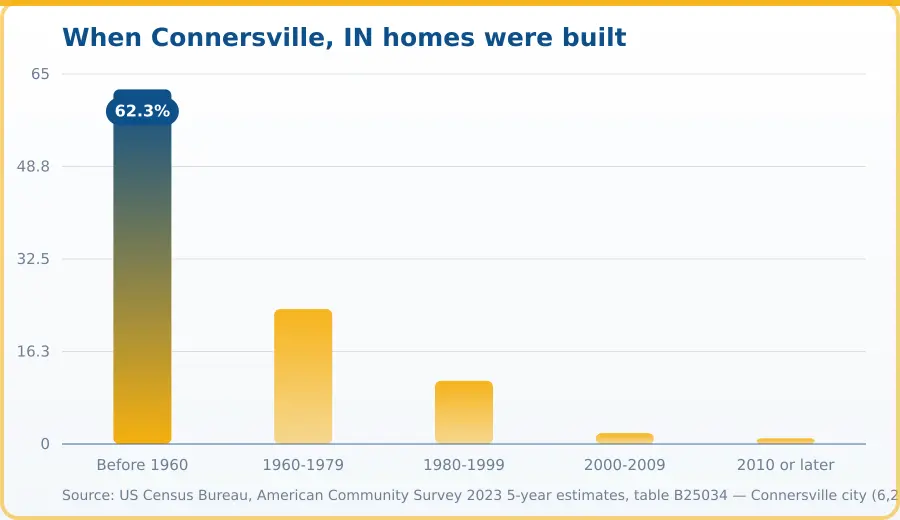
| Period | When homes were built (%) |
|---|---|
| Before 1960 | 62.3 |
| 1960-1979 | 23.7 |
| 1980-1999 | 11.1 |
| 2000-2009 | 1.9 |
| 2010 or later | 1 |
Source: US Census Bureau, American Community Survey 2023 5-year estimates, table B25034 — Connersville city (6,291 housing units). Retrieved October 5, 2026.
Seasonal Shifts in Connersville Mold Removal Scope
Spring: Thaw and Moisture Surge
Snowmelt and spring rains saturate soil around foundations and crawl spaces throughout the region. Water intrusion accelerates during this season, expanding affected materials—drywall, insulation, subflooring—and raising the scope of removal work. Acting quickly before moisture penetrates deeper keeps remediation boundaries smaller.
Summer: Heat and Humidity Pressure
The humid continental climate that defines this area maintains elevated moisture levels year-round, and summer heat intensifies air-holding capacity, creating persistent dampness in basements and crawl spaces common to older Connersville homes. Mold growth expands into previously dry areas, widening the containment zone and materials requiring removal.
Fall: Water Intrusion and Decay
Autumn rain and falling leaves clog gutters and downspouts, channeling water into wall cavities and foundation cracks. Extended exposure over weeks can soak insulation and structural wood, requiring removal of more materials and potentially triggering post-remediation clearance testing to confirm thorough restoration.
Winter: Freeze-Thaw and Hidden Damage
Freeze-thaw cycles crack foundations and force water into walls through gaps that widen with temperature swings. Water trapped inside structures may remain undetected until spring, by which time mold colonization has spread extensively, increasing the volume of contaminated materials needing removal and the likelihood of structural repairs.
Related Services
Mold Removal Cost FAQs — Connersville, IN
The size of the affected area, materials that need treatment, and containment requirements are the primary cost drivers. If structural materials like drywall or insulation are involved, or if the mold has spread across multiple rooms, costs increase. The complexity of accessing affected areas—such as basement walls or crawl spaces—also influences the final price a local provider will quote.
Early action prevents mold from spreading deeper into walls, insulation, and structural materials. The longer mold grows unchecked, the more extensive containment and removal becomes necessary, and rebuild work may be required. Addressing the problem as soon as you notice it typically keeps the scope—and therefore the cost—significantly lower than waiting.
A local provider inspects your property on-site to assess the extent of mold growth, identify affected materials, and determine containment and remediation needs. Based on that inspection, they provide you with an estimate that reflects the specific scope of work required. This hands-on assessment is how accurate pricing is determined for your situation.
Insurance coverage for mold removal depends on your specific policy and the cause of the mold growth. Some policies may cover mold resulting from sudden water damage, while others may not. It's best to review your policy details or contact your insurer directly; a local provider can also discuss how insurance may apply to your particular case.
Barrett Mold Remediation connects you with independent local providers in your area who can typically schedule an on-site inspection relatively quickly. Once you reach out, a provider will contact you to arrange a time that works for your property assessment and cost estimate.
Connersville's humid climate and older homes with basements and crawl spaces create ongoing moisture challenges that can make mold remediation more complex. Properties with poor drainage, high groundwater, or ventilation issues may require additional containment measures or moisture-control work, which can influence the overall cost of removal and prevention.
Homeowner Safety Toolkit
Verify Your Connersville, IN Mold Remediation Company
Before you hire anyone, use these independent national resources to confirm credentials, standards, and track record.
BBB
Look up any mold remediation company's complaint history, customer reviews, and accreditation status — a free, independent check before you hire.
Check StandingCDC
Covers the health effects of mold exposure and safe cleanup practices, separate from the remediation work itself — useful if anyone in the home has respiratory symptoms.
Mold Health GuideIICRC
Publishes the S520 standard for professional mold remediation. Confirm a company's technicians hold real, current IICRC certification before you hire them.
Verify CertificationQuestions about Mold Removal Cost in Connersville, IN? Call (765) 885-6366 to arrange a local on-site estimate.
Call Now — (765) 885-6366Areas We Serve in Connersville, Indiana
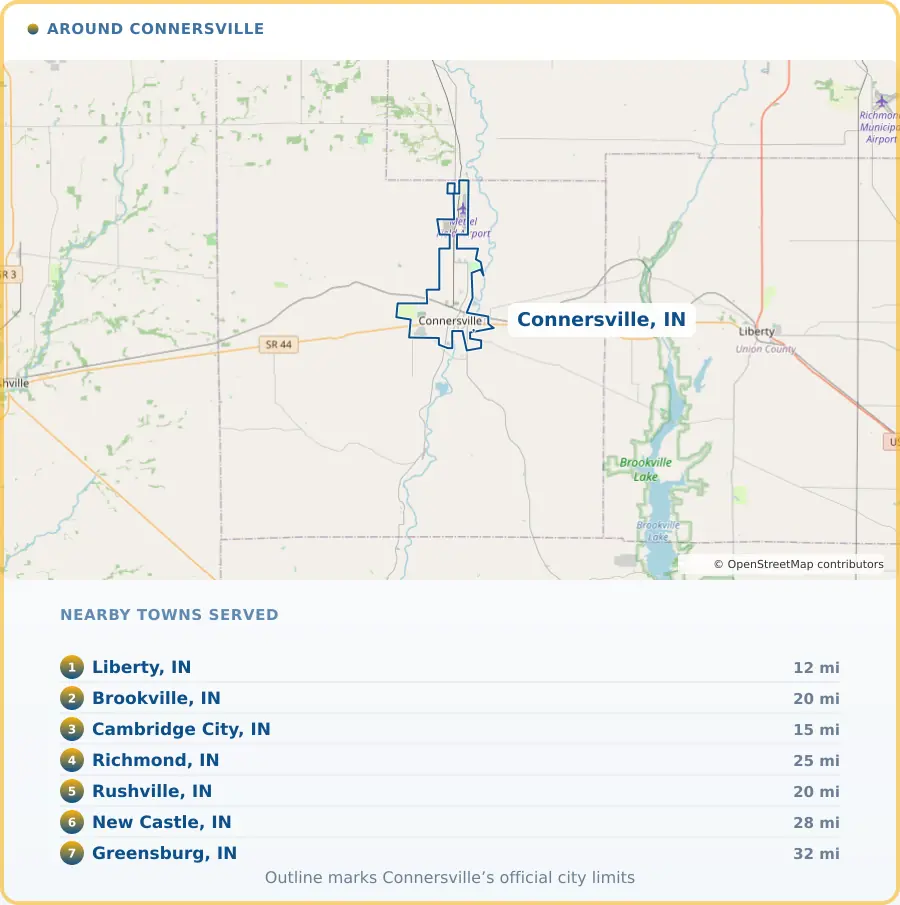
Connersville, IN is the centre of the service area, which extends to 7 surrounding towns. The map shows how far that reaches.
Connersville, IN Information
Tucked into east-central Indiana, Connersville still carries echoes of its old nickname, 'Little Detroit,' earned during decades as a hub of automobile manufacturing. That industrial spirit hasn't faded so much as evolved — today automotive parts production works alongside healthcare, agriculture, and steady retail activity to keep roughly 12,600 residents employed and the local economy humming. Fayette Regional Health System and long-running manufacturing operations remain cornerstones of the job market, joined by schools, county government, and familiar retailers that give the city its everyday rhythm.
It's a place that has learned to adapt without losing its character: a modest-sized Indiana community where farm fields, factory floors, and small-town main street life all share the same zip code, and where generations of families have built steady, practical lives.
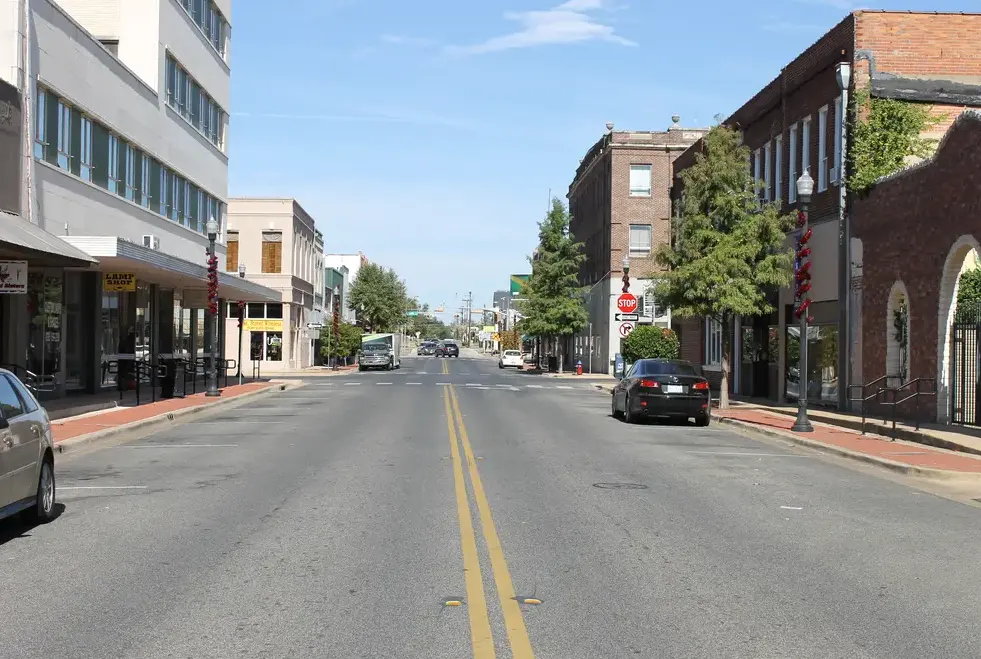
Photo: Billy Hathorn, CC BY-SA 3.0